Discovery the Night on an Owl Prowl
BY Lindsey B., Program Supervisor
Imagine it...the trail feels different after dark. Familiar landmarks fade into the shadows; every rustle seems a little louder; and our attention shifts from what we can see to what we can hear. Then, from somewhere beyond the reach of the light from your headlamp, comes the unmistakable sound of an owl.
An Owl Prowl is a nighttime hike that reveals a side of the outdoors that many people don't get to see. With a knowledgeable instructor leading the way, participants learn about the owls that live in the area, the behaviors that make them such fascinating nighttime hunters, and the calls that may reveal where these elusive birds are hiding. The group then heads onto an easy trail to look, listen, and experience the landscape in a completely different way.
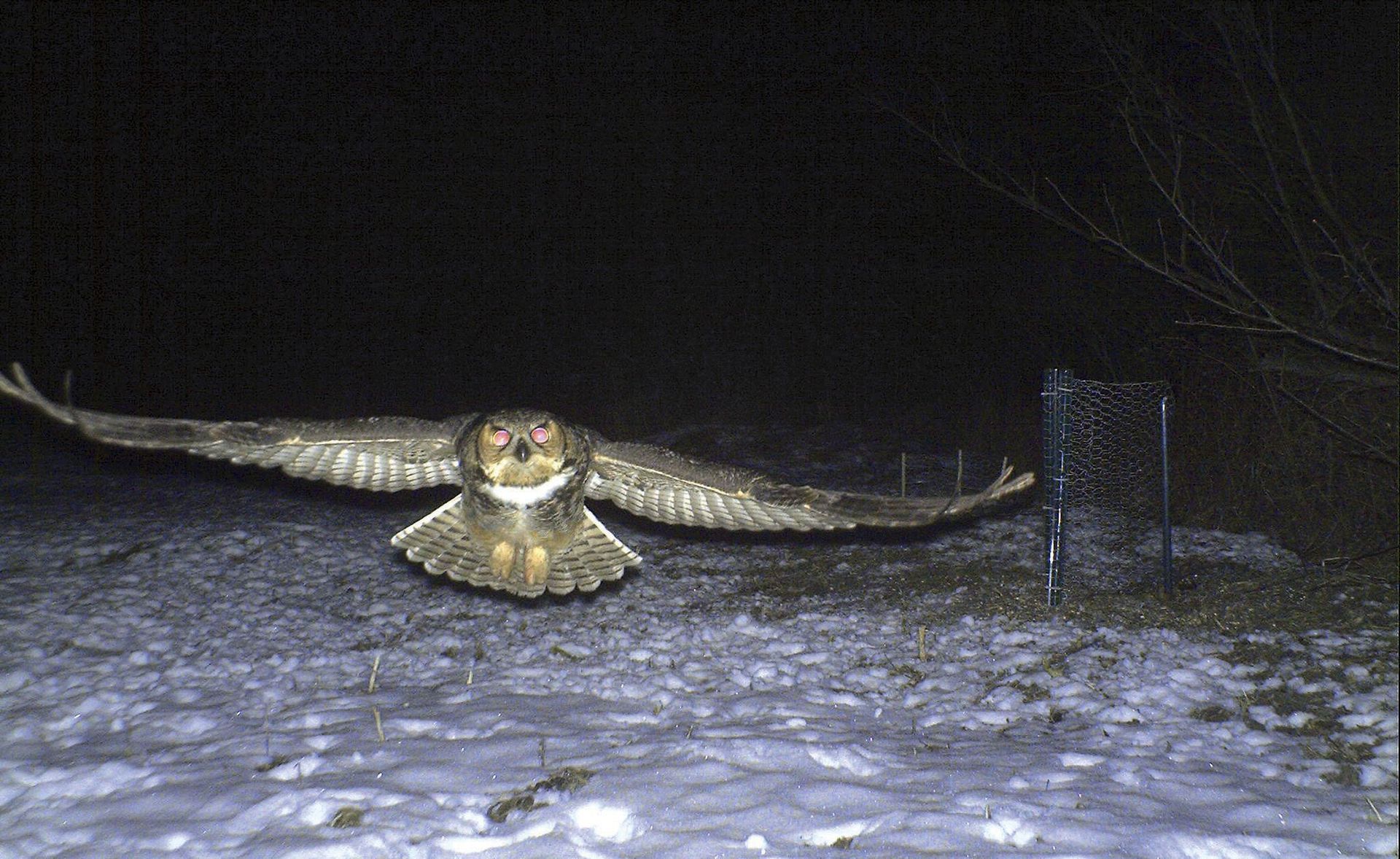
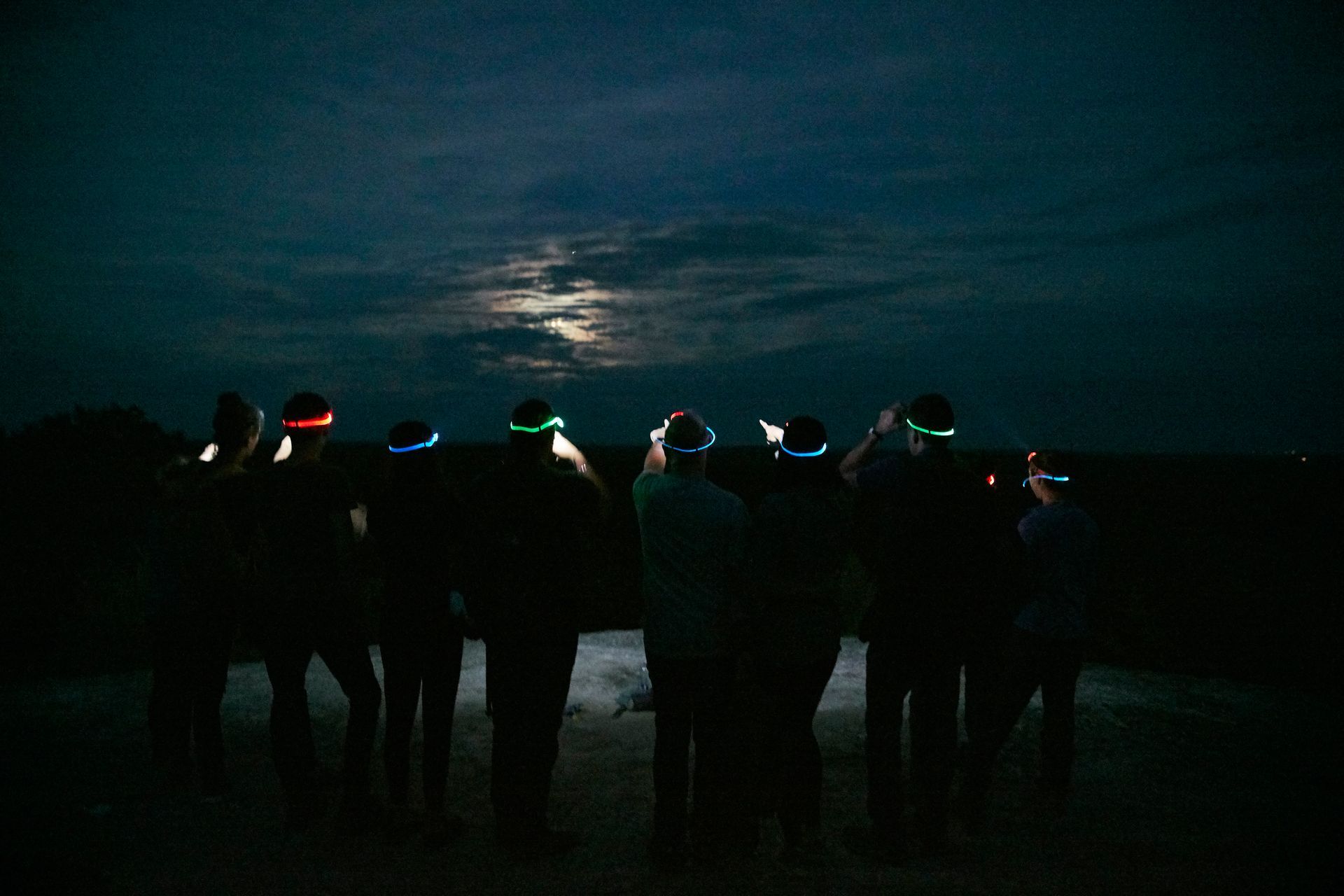
Whoooo will you see out there?
The species you may encounter on the trail depend on where you live. Barred Owls, Great Horned Owls, and Eastern Screech-Owls are most common across much of the eastern United States. Each has a distinct voice that, with practice, can be identified by even beginner birders. The iconic deep hoot of the Great Horned Owl and the "who-cooks-for-you?" questioning call of the Barred Owl are easy to hear in the quiet night air.
On an Owl Prowl, hearing an owl is often just as exciting as seeing one. Owls have many adaptations that make them difficult for us to spot but make them excellent hunters at night. Their feathers are designed for silent flight, their asymmetrical ears sit at two different heights to help pinpoint prey in the dark, and their binocular vision and impressive head rotation make it easy to lock onto a target without even moving.
The night shift
Dusk and the first few hours after sunset are great times to listen for many owl species, although activity varies by species, season, and location. Winter can be an especially interesting time because some owls become more vocal while establishing territories or bonding with their mates. This makes Owl Prowls a great way to get outside, even in the colder months.
It’s always good to remember that there is never a guarantee an owl will appear or answer a call. Wildlife follows its own schedule, but that uncertainty is what makes the experience so special. A quiet trail, a distant call, or even a silhouette passing through the trees overhead can become a moment everyone remembers.
To hoot or not to hoot?
Apps like Merlin Bird ID make it easier to learn about owl calls and identification. They can also be useful tools on an Owl Prowl hike, but they must be used responsibly and ethically. To an owl, a recording can sound like another bird entering its territory. When a call is played repeatedly or at poorly timed moments, it can cause unnecessary stress for the animals.
Responsible owl prowling means using calls only when appropriate, following local regulations, avoiding known nesting areas, limiting the frequency and volume, and stopping if an owl responds or shows signs of distress. During sensitive nesting periods, the best choice may be not to use calls at all.
See the night in a new light
An Owl Prowl isn't a hike about covering miles or checking a sighting off a list. It is a chance to slow down, tap into your senses in a different way, and discover what goes on outside after the sun goes down.
L.L.Bean Outdoor Discovery Programs' Owl Prowls begin with an introduction to local owl species and their behavior, followed by a relaxed nighttime hike led by our experienced instructors. Whether an owl answers with a hoot in the distance, appears in the shadows on a tree branch, or remains hidden for the evening, you'll leave with a better understanding of these mysterious birds and a new appreciation for the outdoors after dark.
Sign up for an Owl Prowl guided hike and join us outside!