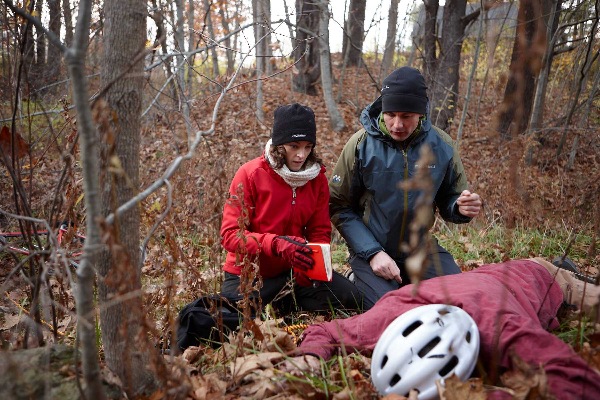
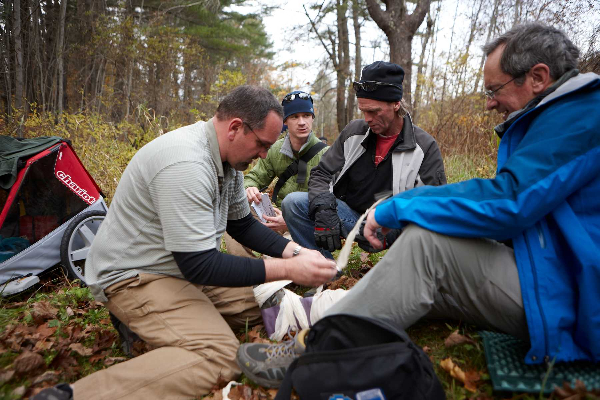
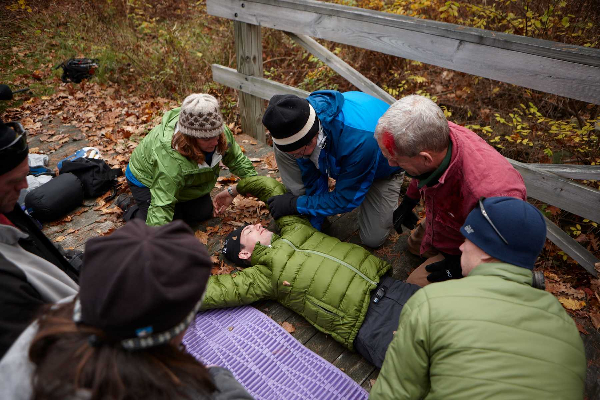
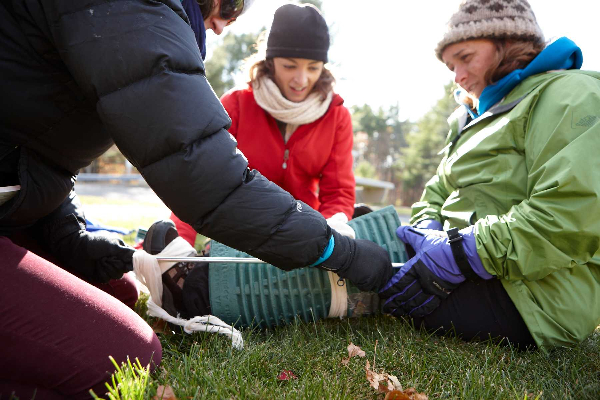
L.L.Bean has partnered with Wilderness Medical Associates, a respected leader in wilderness medical education since 1981, to bring you this four-day (36-hour) comprehensive wilderness first-aid bridge course. It expands upon the WAFA program, providing a wider range of subject material and more in-depth hands-on patient interaction. Case studies are an important part of our curriculum and are analyzed each day.
Day one begins with an overview of general wilderness first-aid concepts. You’ll be taught how to assess a patient and learn about the circulatory and respiratory systems, controlling infections, CPR and basic life-support methods.
Day two will focus on the nervous system, a common area of serious injury in the outdoors. You’ll learn how to manage damage to the spine and other musculoskeletal areas, plus treatment methods such as splints and lifting/extrication techniques. You’ll conduct extensive drills on accurate patient assessment, so you know exactly what to do in this type of emergency situation.
Day three covers how to handle a wide range of potential hazards, including thermoregulation methods; bites and stings; lightning and electrical injuries; wounds and burns; anaphylaxis and allergies. You’ll receive step-by-step instruction, plus hands-on practice in patient-rescue techniques, including improvised carries and further assessments. You’ll also be able to choose from a variety of elective topics on wilderness first aid.
Day four wraps up the program with a detailed case study incorporating many of the subjects you’ve previously covered. You also discuss other topics like backcountry medicine and medical/legal issues. You’ll conduct patient assessments and simulations and have another opportunity to explore more elective topics.
This course allows WMA/WAFA graduates to upgrade their certification to WMA/WFR, the widely held industry standard for outdoor leaders. All necessary equipment, including course materials, is provided. Successful completion of the course requires full attendance and satisfactory performance on written and practical quizzes. Itinerary subject to change at instructors’ discretion.
Day one begins with an overview of general wilderness first-aid concepts. You’ll be taught how to assess a patient and learn about the circulatory and respiratory systems, controlling infections, CPR and basic life-support methods.
Day two will focus on the nervous system, a common area of serious injury in the outdoors. You’ll learn how to manage damage to the spine and other musculoskeletal areas, plus treatment methods such as splints and lifting/extrication techniques. You’ll conduct extensive drills on accurate patient assessment, so you know exactly what to do in this type of emergency situation.
Day three covers how to handle a wide range of potential hazards, including thermoregulation methods; bites and stings; lightning and electrical injuries; wounds and burns; anaphylaxis and allergies. You’ll receive step-by-step instruction, plus hands-on practice in patient-rescue techniques, including improvised carries and further assessments. You’ll also be able to choose from a variety of elective topics on wilderness first aid.
Day four wraps up the program with a detailed case study incorporating many of the subjects you’ve previously covered. You also discuss other topics like backcountry medicine and medical/legal issues. You’ll conduct patient assessments and simulations and have another opportunity to explore more elective topics.
This course allows WMA/WAFA graduates to upgrade their certification to WMA/WFR, the widely held industry standard for outdoor leaders. All necessary equipment, including course materials, is provided. Successful completion of the course requires full attendance and satisfactory performance on written and practical quizzes. Itinerary subject to change at instructors’ discretion.
L.L.Bean Flying Point Paddling Center
14 Marietta Ln, Freeport, ME 04032